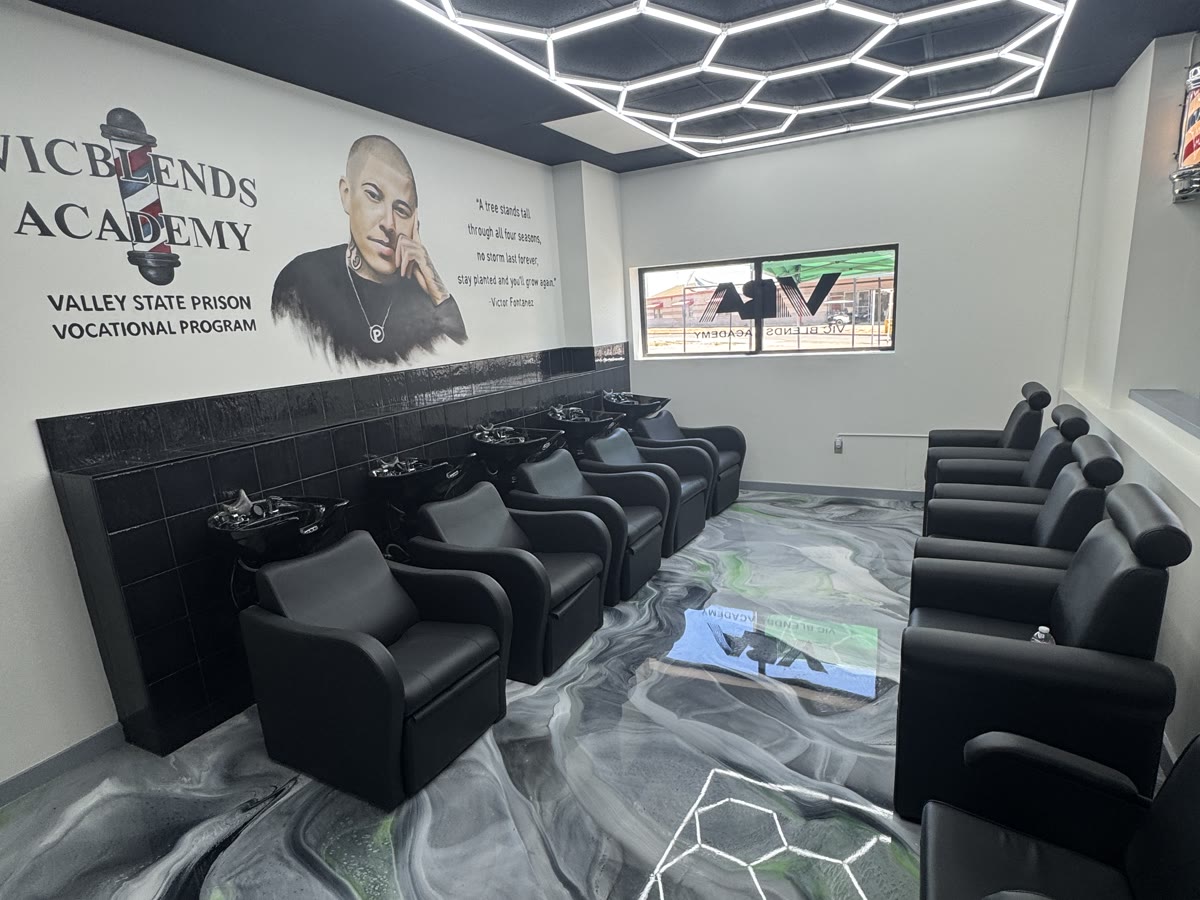
Here’s the decision in one line: polished concrete refines the slab you already have, while epoxy and metallic systems put a new surface on top of it. If your slab is sound and you like the idea of concrete looking like concrete, polishing can be a great floor. If your slab has cracks, patches, stains, or an uneven history, or you want a color and finish concrete can’t give you, a coating usually wins.
We install both, so we don’t have a horse in this race. What follows is how we walk homeowners and business owners through the choice for living spaces, offices, studios, and storefronts.
What Each Floor Actually Is
Polished concrete
Polishing is a mechanical process. We grind the slab with progressively finer diamond tooling, apply a densifier that hardens the surface, and keep refining until the concrete reaches the sheen you want, from a soft satin to a high reflective gloss. There’s no thick coating sitting on top; the shine comes from the concrete itself. Our concrete polishing page covers the process in more detail.
Epoxy and metallic epoxy
An epoxy floor is a resin system bonded to a prepared slab. A solid-color epoxy gives you a uniform, seamless surface. A metallic epoxy floor adds metallic pigments that are worked while the resin is wet, creating movement, depth, and a marbled or flowing look. Each one is finished with a clear topcoat.
Look: Honest Concrete vs. Designed Surface
Polished concrete has a natural, mineral look. You see the cream of the concrete, sometimes some exposed aggregate depending on how deep we grind, and all the small variations that make it concrete. Many people love that it’s genuinely the slab, not a layer pretending to be something else.
Epoxy gives you control. You choose the color, the finish, and with metallic, the movement and character. If you want a floor that looks like flowing marble, a deep ocean swirl, or a bright clean white, that’s a coating, not a polish. Projects like our white marble metallic home and champagne metallic rooms show what that range looks like.
One of our customers, Lovelhie L., put it this way: “We are so happy with our new metallic resin floor!.. the metallic finish has so much depth and shine, it honestly looks like something out of a showroom.” That kind of depth is something polished concrete simply doesn’t do.
Slab Requirements: Polish Shows the Slab’s History
This is the point most people don’t hear until it’s too late. A polished floor reveals everything about the slab.
- Cracks stay visible. They can be filled, but the fill line shows.
- Patches from old plumbing work, removed walls, or repairs will look different from the original pour.
- Stains from oil, paint, adhesives, or old flooring glue often can’t be ground out completely.
- Tack strip holes and nail holes from old carpet show up as small dots around the room edges.
- Inconsistent finishing from the day the slab was poured, such as trowel marks or soft spots, shows when the surface is opened up.
In a new build where the slab was placed with polishing in mind, that’s usually fine. In a remodel where you’ve just pulled up carpet or tile, it’s often a surprise. On an existing slab, we recommend grinding a small test area before committing to a polish so you can see what’s underneath.
Epoxy is more forgiving. We grind, repair cracks, fill holes, and level low spots before the coating goes down, and the coating covers it all. The slab still needs to be sound and dry, but it doesn’t need to be pretty.
Moisture
Both floors care about moisture, in different ways. Coatings can be pushed off a slab by moisture vapor coming up from below, so we test and use a moisture vapor barrier primer when needed. Polished concrete doesn’t delaminate because nothing is sitting on top, which is one reason it’s popular on slabs where moisture is a concern.
Maintenance
Polished concrete
Day-to-day care is dust mopping and occasional damp mopping with a pH-neutral cleaner. Grit is the enemy, because it dulls the surface. Polished concrete is stain-resistant once densified and guarded, but it’s still concrete; acids like wine, citrus, or vinegar can etch it if left to sit. High-traffic paths may need periodic burnishing or a light re-polish to restore the shine.
Epoxy and metallic
Also dust mop and damp mop. The topcoat is the wear layer, and it resists most household spills well. The honest caveat: metallic floors show scratches more readily than a flake floor or polished concrete, especially in darker colors. Furniture pads and a good entry mat go a long way. Over time, a worn topcoat can be lightly abraded and recoated to bring the gloss back.
Slip Resistance
Neither floor is inherently dangerous, and neither is inherently grippy when wet.
Polished concrete, kept clean and dry, generally has reasonable traction for interior spaces. Wet or dusty, it can get slick, and a very high gloss doesn’t make it more slippery by itself, but contamination on any smooth surface does.
Epoxy and metallic systems can be finished with a fine anti-slip additive in the topcoat. That slightly changes the feel and sheen, so it’s a balance between appearance and grip. For entries, kitchens, and commercial areas, we’ll usually recommend some texture.
Sound and Feel
Both are hard floors, so neither has the softness of carpet or the give of wood. Polished concrete feels exactly like what it is: dense, cool, and solid. Epoxy has a slightly smoother, warmer touch, since you’re walking on resin rather than bare concrete, but the difference underfoot is modest.
Hard floors reflect sound. In open living spaces, area rugs, curtains, and soft furniture help keep echo in check regardless of which floor you choose.
Cost Drivers (Without Made-Up Numbers)
Every floor is quoted on site, so we won’t throw out a number here. What we can tell you is what pushes cost up or down.
| Factor | Polished concrete | Epoxy / metallic |
|---|---|---|
| Slab condition | Big driver; repairs show and add grinding passes | Repairs are covered by the coating |
| Level of shine | Higher gloss means more grinding steps | Gloss comes from the topcoat |
| Materials | Densifier and guard, no resin layers | Primer, base, pigments, topcoat |
| Existing flooring removal | Adhesive removal can be extensive | Same, but residue is covered |
| Design complexity | Mostly uniform; saw-cut patterns add labor | Metallic artistry and multiple colors add labor |
| Moisture | Rarely a cost factor | May require a vapor barrier primer |
Dayna J., who chose a metallic garage floor, summed up a common feeling: “It was a little on the pricey side but well worth it!” Metallic systems involve more material and more hand work than a basic polish or solid color, and the result reflects that.
Where Each One Wins
Polished concrete wins when:
- The slab is newer, flat, and in good condition.
- You want a natural, industrial, or minimalist look.
- The space is large, like a showroom, warehouse, or open-plan office, where a polish is efficient over big square footage.
- Moisture is a concern and you’d rather not have a coating that could be pushed up.
Epoxy or metallic wins when:
- The slab has cracks, patches, stains, or adhesive residue you want covered.
- You want a specific color, a uniform look, or a showpiece finish.
- The room is a living space, studio, or salon where design is the point.
- You want a seamless surface that’s easy to keep sanitary.
For living spaces specifically, our interior epoxy floors page shows how coatings work in homes. For businesses, our commercial epoxy flooring page covers higher-traffic considerations.
How We Decide With You
On a site visit, we look at the slab, ask how you’ll use the room, and talk about the look you want. If polishing is on the table, we’ll recommend grinding a small test spot so there are no surprises. If a coating makes more sense, we’ll explain why and show samples, including metallic boards you can hold up in your own light.
The wrong answer is picking a floor because it looked good in someone else’s house. The right one starts with your slab and how you live on it.