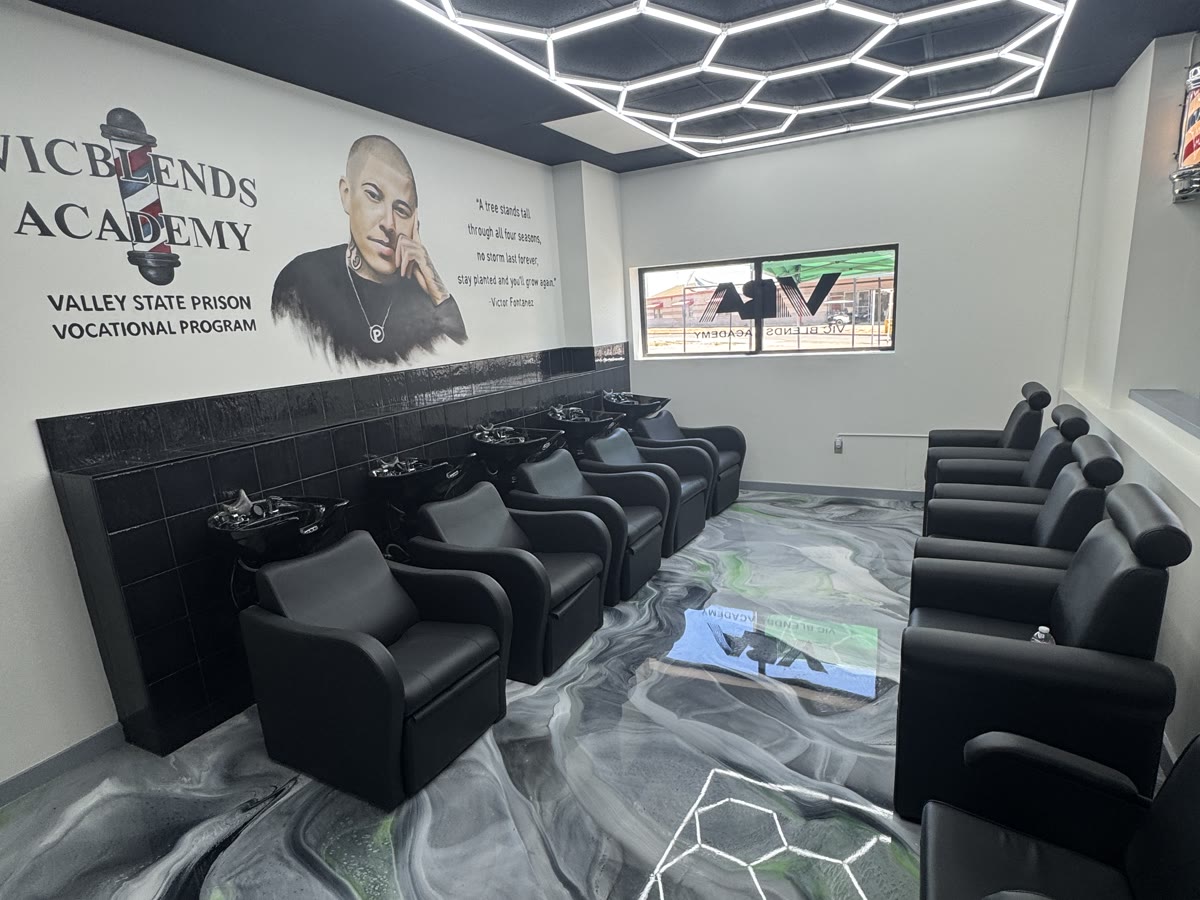
What epoxy flooring actually is
Epoxy is a two-part resin. When the resin and hardener are mixed, they react and cure into a hard plastic film that bonds to concrete. On a properly prepared slab, that bond is strong enough that the concrete usually fails before the coating does.
The word gets used loosely. People say “epoxy floor” for anything glossy on concrete, including systems where the top layer is not epoxy at all. In practice, most of the floors we install are layered builds: an epoxy primer or base, a decorative layer, and a clear topcoat chosen for the conditions the floor will see. Knowing which layer does what is the easiest way to compare quotes.
The epoxy systems we install
Everything below starts the same way, with diamond grinding and repair. What changes is the decorative layer and the topcoat on top of it.
Solid-color epoxy
A pigmented base and a clear or tinted topcoat. It is the most utilitarian look, common in workshops and storage areas where a clean, bright surface matters more than pattern. Solid colors show dust, tire marks and scratches more than other options, so we steer most homeowners toward a broadcast or metallic finish instead.
Flake (chip) epoxy
Colored vinyl chips are broadcast into the wet base coat until it is fully covered, scraped, then sealed under a clear coat. This is the most popular garage floor for good reason: it hides dust and small imperfections and has a little texture underfoot. See the full breakdown on our flake epoxy flooring page.
Metallic epoxy
Metallic pigments are mixed into a clear epoxy and worked across the floor while it is still fluid, creating movement that looks like marble, water or polished stone. It is the showpiece option for living spaces, showrooms and some garages. The metallic epoxy page covers how it is installed and where it struggles.
Polyaspartic topcoats and one-day systems
Polyaspartic is a fast-curing, UV-stable relative of polyurea. We use it as the clear coat over many epoxy builds and as the main resin in our one-day garage systems. The trade-offs are explained on the polyaspartic coatings page.
How the main systems compare
| Feature | Solid-color epoxy | Flake system | Metallic epoxy |
|---|---|---|---|
| Hides dust and debris | Fair | Best | Fair |
| Shows scratches | Noticeable | Least | Most |
| Texture underfoot | Smooth | Light texture | Smooth |
| Design control | Limited | Choose a blend | Custom and one of a kind |
| Typical spaces | Shops, storage | Garages, patios | Homes, salons, showrooms |
| UV exposure | Needs UV-stable topcoat | Needs UV-stable topcoat | Best kept indoors |
None of these columns is “better” across the board. A metallic floor in a busy three-car garage will show every gravel scratch, while a flake floor in a formal living room can feel out of place. We will tell you which one fits the way you actually live.
Where epoxy has limits
Straight epoxy is aromatic, which means sunlight slowly turns it amber. Inside a closed garage that is rarely an issue, but a floor that gets afternoon sun through an open door can yellow over time if it is finished in plain epoxy. That is the main reason we top most builds with a UV-stable polyaspartic.
Moisture is the other limit. Concrete slabs breathe, and when vapor pressure pushes up from below, it can lift a coating that was perfectly applied. Older slabs poured without a vapor barrier are the usual suspects. We test, and when readings are high we use a moisture vapor barrier primer before anything decorative goes down.
Temperature matters too. Epoxy cures more slowly in a cold garage, so winter installs can take longer between coats than summer ones.
Prep is most of the job
Most coating failures trace back to prep, not product. A floor that was acid-etched or simply pressure-washed leaves a smooth, weak surface the resin cannot grip. We grind every slab with planetary diamond grinders connected to HEPA dust extraction, which opens the pores of the concrete and removes sealers, paint and contamination.
Then comes repair. Cracks are cut open and filled, spalled spots are patched, and control joints are either filled for a seamless look or kept open where the slab needs room to move. If the floor has deeper problems, our concrete grinding page explains how we handle leveling and coating removal.
A Verified Google reviewer described one of these installs this way: “It was a quick 2-day project roughly 4hrs each day. Mario and his crew were prompt and on-time every day.” Two days is common for a full epoxy build; a one-day system is possible when the slab and product allow it.
Questions worth asking any installer
Quotes for “epoxy floors” can describe very different jobs, so a few questions will tell you whether you are comparing like with like.
- How will the concrete be prepared? Diamond grinding is the answer you want. Acid etching or a pressure wash alone is a red flag.
- Will the slab be tested for moisture? If the answer is no, nobody knows whether a vapor barrier primer is needed.
- What is each layer, and what chemistry is the topcoat? A quote should list primer, base, decorative layer and clear coat by type.
- What happens to cracks and joints? Filled, honored or ignored makes a big difference in the finished look.
- Who stands behind the floor if it fails? Get the warranty terms in writing before work starts.
Picking the right system for your slab
Our shop and showroom are at 392 W Larch Rd in Tracy, and you are welcome to come see finished samples in person. The same building houses Exclusive Resin Supply, our sister company, so the Simiron and JP Resin products we install are the ones we stock and test. We install with the same field-tested products we stock.
When we visit, we look at three things: what the slab will allow, what the room will be used for, and how much maintenance you want to deal with. If you are coating a garage, start with garage floor coatings. For finished rooms inside the house, interior epoxy floors covers the questions that come up most. Our written warranty stands behind the installation itself, not a marketing promise about a lifetime.